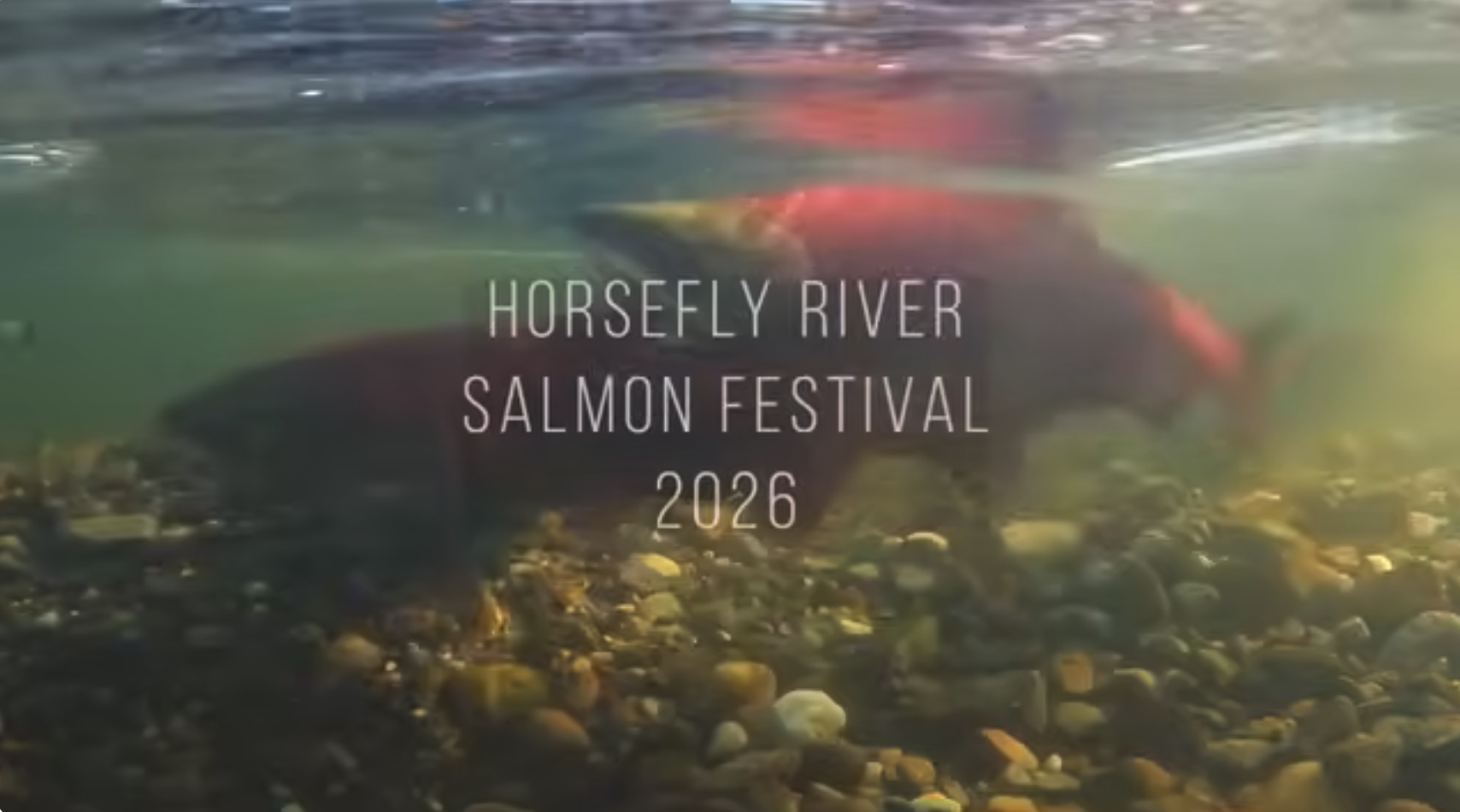
Sunday June 1st is recognized across Canada as Wild Salmon Day.
The idea being to celebrate the historical, economic and environmental importance of wild salmon to our country’s past and future. The Horsefly Roundtable group would like the community and everyone who works or plays in the watershed to reflect on the decline of our precious salmon run and the reasons for it.
Truth is that in the past twenty five years the numbers of returning fish have dwindled from a high of over two million fish on a dominant year to the present reality of a few thousand on recent less dominant years. The importance of the salmon run to the biodiversity and environmental health of the watershed cannot be overstated and is a direct reflection of it’s present condition.
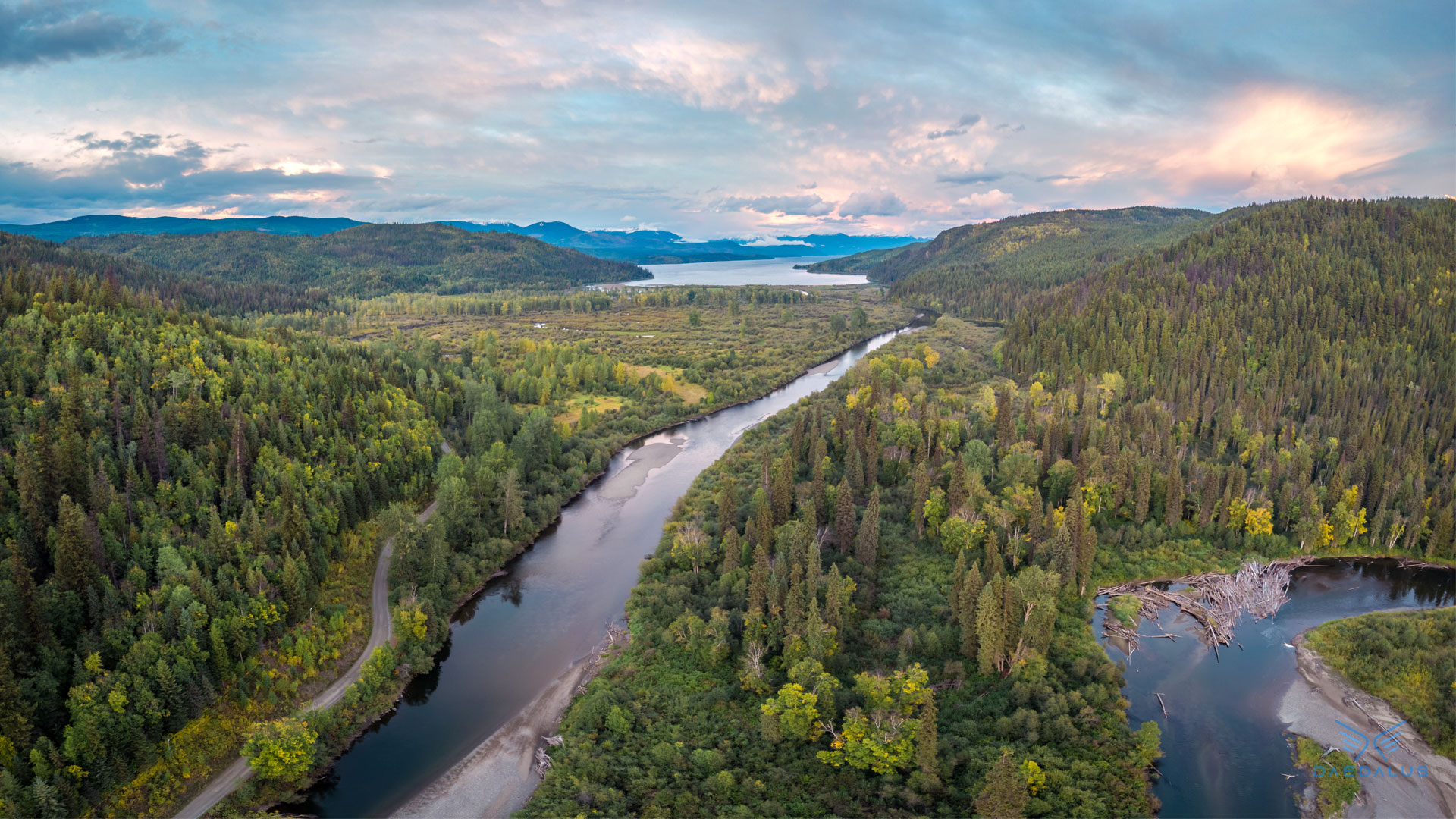
Science would point to climate change and industrial logging as the two biggest factors threatening the future of local wild salmon. Climate change is a debate far bigger than the intent of this post, but timber harvesting volumes and methods are something we can control. Clearcut logging, especially from the Moffat and Woodjam watersheds has resulted in the siltation of much of the spawning habitat in the lower reaches of the Horsefly River leaving the upper river just below the falls as the only area left with clean spawning gravels and cooler water temperatures for the returning Horsefly salmon.
Clearcut logging practices eliminate the hydrological integrity of the landscape and the ability of the watershed to retain rainfall and runoff. The result is the rapid fluctuations in water levels and increase in silt migration we now experience. Primary forests protect the watershed in so many ways and they also protect us from climate change. What we do log must be done with sustainable practices our we risk becoming a statistic like Grand forks or Merritt.
Let’s all work together to protect our beloved salmon run and the future of our community.
Bill Lloyd
Horsefly River Roundtable, Vice Chair